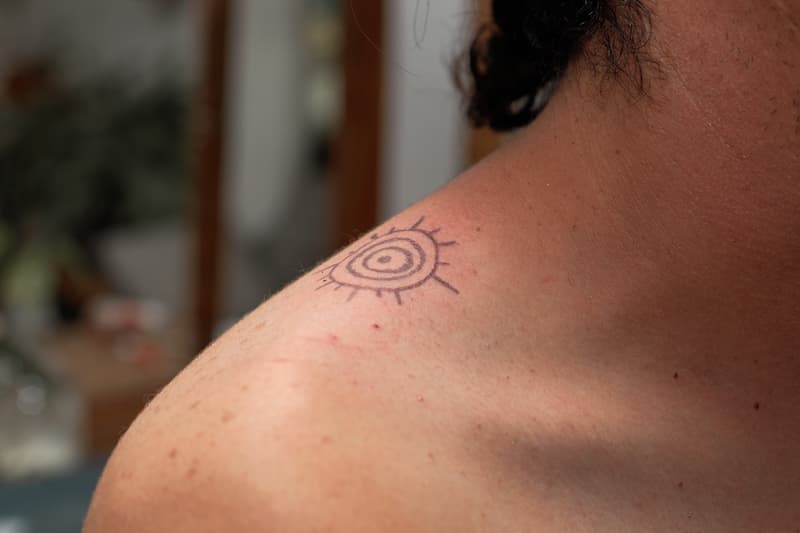
Why Placement Matters More Than Most People Expect
People tend to focus most of their attention on the design — and then pick a placement somewhat arbitrarily. But placement shapes everything: the contours of the body become part of the composition, movement affects the way lines read over time, and different areas of skin age at very different rates.
An experienced artist will think about placement from the first conversation. If yours doesn't bring it up — ask.
The Four Factors to Consider
1. Longevity
Some areas of the body age tattoos faster than others. High-friction zones, sun-exposed areas, and skin that stretches significantly over time all work against the ink. Places that tend to age well:
- Outer upper arm — minimal sun exposure, low friction, good skin texture
- Upper back and shoulders — excellent for larger pieces with longevity
- Ribcage — ages well, though healing can be slower
- Thigh — large surface area with consistent skin quality
Areas that require more commitment and touch-ups:
- Hands and fingers — high friction and sun exposure cause significant fading
- Feet — similar to hands; also difficult to heal in tropical climates
- Inner lip and mouth — usually fades within 1–3 years
- Neck and face — constant UV exposure and visible aging
2. Pain Tolerance
Pain levels vary significantly by placement. If this is your first tattoo, starting in a lower-pain area helps you understand the sensation before committing to a more challenging spot. Lower-pain areas generally include the outer arm, outer thigh, and upper back. Higher-pain areas include the ribcage, spine, inner arm, knee ditch, and anywhere near bone.
✦ First Tattoo Tip
Choose the placement you actually want — not the least painful one. Pain is temporary and very manageable. Regretting a placement you settled for lasts much longer.
3. Visibility and Lifestyle
Think honestly about your life — your work environment, your wardrobe, your social context — and how visible you want this tattoo to be day-to-day. There's no right answer, but it's worth being intentional:
- A wrist or forearm tattoo will be visible in most professional contexts
- An upper back or ribcage piece is easily concealed and revealed
- A hand or neck piece makes a public statement by default
4. How the Design Fits the Body
This is where the artist's input is invaluable. Different designs work better on different body surfaces. Long, vertical designs flow naturally down forearms or calves. Circular or mandala compositions sit beautifully on the chest, thigh, or back. Small, precise designs work well on the wrist or behind the ear. Flowing, organic pieces often follow the natural curves of the shoulder or hip.
Bring your design idea to the consultation without a fixed placement. Let your artist suggest where the composition would work best with your body's lines — you may be surprised by the result.
Placement and Style
Style and placement interact in specific ways. Fine line work tells a different story on a forearm than on a ribcage. Blackwork reads differently on an outer thigh versus an inner bicep. If you haven't yet decided on a style, your placement preference can sometimes guide that choice — and vice versa.
Final Thought
The best placement is the one that feels right for you — in your body, in your life, and for the specific design you're carrying. Take time with this decision. Sleep on it. Try different spots in the mirror. And when in doubt, ask your artist.