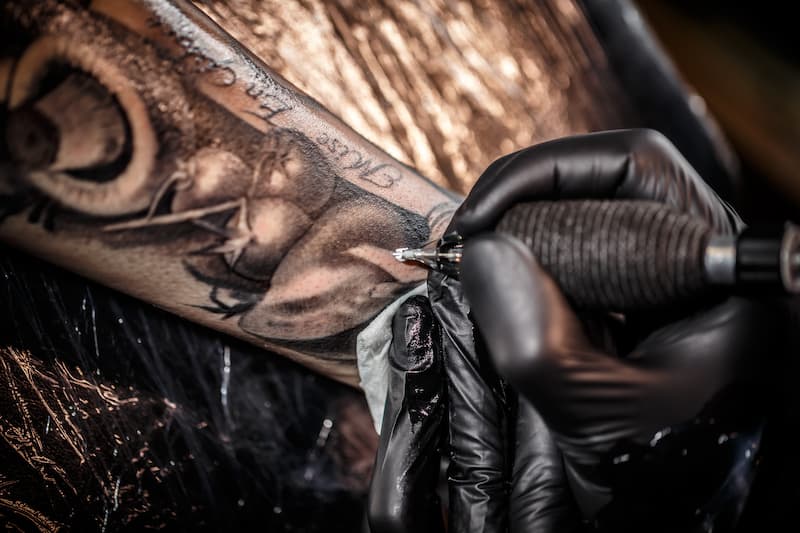
What Is Blackwork?
Blackwork refers to tattoos executed exclusively in black ink — typically bold, graphic, and high-contrast in nature. The style draws from a wide range of influences: tribal traditions from Polynesia and Southeast Asia, European woodcut printing, sacred geometry, and contemporary abstract art.
What unites these influences is the commitment to using negative space — the un-tattooed skin — as an active design element. Blackwork is as much about what isn't inked as what is.
Why Blackwork Lasts
From a technical standpoint, blackwork is among the most durable tattoo styles. Here's why:
- Heavy pigment density: Solid black ink deposits significantly more pigment than fine line work, meaning the design holds its impact even as skin ages.
- High contrast: The visual impact of blackwork comes from contrast, not detail — so minor aging doesn't affect the overall read of the piece.
- No color fading issues: Color tattoos lose vibrancy over time as UV breaks down pigment. Black ink is the most UV-stable tattoo pigment available.
✦ Artist's Perspective
A blackwork tattoo done with intention tends to look better at 10 years than it did at one. The initial boldness softens slightly, and the piece settles into the skin in a way that feels completely natural and lived-in.
Blackwork Substyles
Geometric & Sacred Geometry
Clean lines, perfect symmetry, and mathematically precise patterns. Sacred geometry pieces — mandalas, platonic solids, vesica piscis — are especially popular for their symbolic depth and visual precision.
Tribal
Rooted in ancient traditions from Polynesia, Borneo, and the Philippines, tribal blackwork uses flowing, interlocking patterns that follow the body's contours. When done with cultural respect and personal meaning, it's one of the most powerful forms of body art.
Illustrative Blackwork
Combines fine line detail with areas of solid fill. Often used for botanical, animal, or figurative designs — creating a result that reads like a high-contrast illustration printed on skin.
Abstract & Organic
Non-representational blackwork that uses shapes, brush strokes, or flowing forms. Often deeply personal and conceptual — designed to evoke emotion rather than depict a specific subject.
How to Approach Your Blackwork Consultation
The conversation with your artist before a blackwork piece is as important as the tattooing itself. Come prepared with:
- References — images that capture the aesthetic you're drawn to, even if they aren't exactly what you want
- Placement clarity — blackwork is deeply shaped by body contour; knowing where it goes changes everything
- A word or concept — not just "I want something geometric" but why, and what it should feel like to you
- Openness to collaboration — the best blackwork comes from dialogue, not a downloaded image
Is Blackwork Right for You?
Blackwork is a bold commitment. Unlike fine line, it's difficult to add to subtly — the visual weight is significant. But for those seeking a piece with longevity, visual power, and deep personal meaning, it's one of the most rewarding styles to wear.
It's particularly well-suited to those who want a tattoo that reads clearly from a distance, that ages beautifully without touch-ups, and that carries symbolic or spiritual weight beyond pure aesthetics.