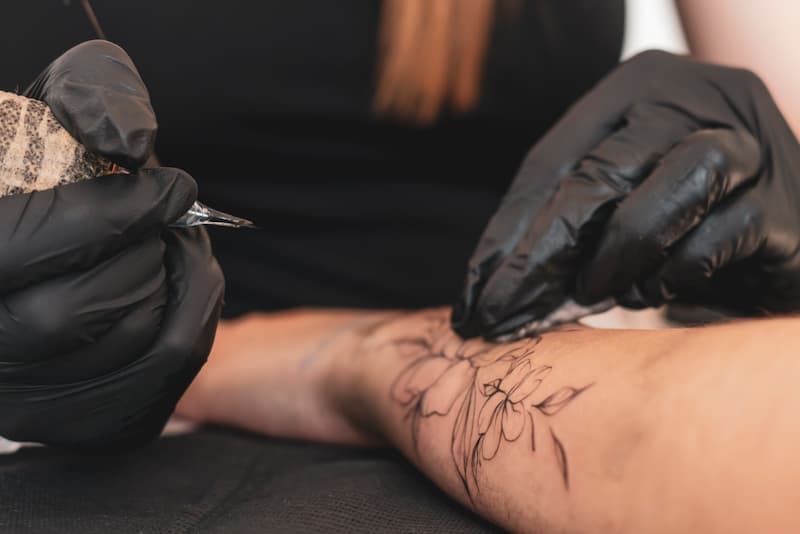
The Myth of the Fading Fine Line
Somewhere along the way, the idea spread that fine line tattoos don't last. Clients sometimes come in hesitant, worried their delicate design will blur into a ghost of itself within a few years. This myth usually comes from real-world examples of poorly done work — not the technique itself.
Fine line is one of the most demanding styles in tattooing. It requires precision, the right needle configuration, proper ink density, and an artist who truly understands skin. When all those elements align, the result is a tattoo that ages gracefully — not one that disappears.
What Actually Determines How a Fine Line Tattoo Ages
1. Ink Depth
The most critical factor is how deep the ink is deposited. Too shallow and it sits in the outer layers of skin, which shed over time. Too deep and it spreads, giving the appearance of blur. A skilled artist works in the sweet spot — deep enough to stay, precise enough to keep its edge.
2. Needle Configuration
Fine line work requires the right needle. A single needle (or 3RL at most) allows for clean, narrow lines. Artists who use the wrong needle gauge for fine work will see the lines spread — and often blame the style rather than the tool.
3. Placement on the Body
Where you put a fine line tattoo matters enormously. Areas with high friction, sun exposure, or movement age faster:
- High-friction areas (inner arm, fingers, feet) cause faster wear
- Sun-exposed areas (forearm, neck) break down pigment faster
- Stretch-prone areas (stomach, hips) distort over time
- Low-movement areas (upper back, ribcage, outer arm) age best
✦ Artist's Tip
When choosing placement for a fine line design, think about how that area of your body moves, stretches, and sees the sun over a lifetime — not just how it looks today.
4. Aftercare Quality
The healing phase is where many fine line tattoos are lost. Overworked skin, exposure to water, or skipping moisturizer during those first two weeks can permanently affect the outcome. This is especially true in tropical climates like Panama, where heat and humidity speed up the healing process.
How to Maintain a Fine Line Tattoo Long-Term
A fine line tattoo isn't just about the session — it's a long-term relationship with your skin. Here are the habits that make the biggest difference:
- Apply SPF 50 sunscreen every time the tattoo is exposed to sun, even after healing
- Moisturize daily — hydrated skin holds ink better for longer
- Avoid prolonged soaking (pools, ocean, baths) once healed during peak sun hours
- Book a touch-up if needed after full healing (6–8 weeks). Most fine line pieces benefit from one
The Role of the Artist
No level of aftercare can compensate for poor technique. Choosing an artist who specializes in fine line work — not just one who offers it as a side style — is the single biggest factor in how your tattoo ages. Ask to see healed work, not just fresh photos. Healed photos tell the real story.
At Shakti Tattoo in Casco Antiguo, every fine line piece is approached as a long-term design — built to endure Panama's tropical climate and the natural aging of your skin.
Final Thoughts
Fine line tattoos don't age poorly by nature. They age poorly when done without the right knowledge, tools, or care. When the technique is right, the placement is thoughtful, and the healing is respected, a fine line tattoo becomes one of the most enduring and elegant forms of body art.
If you're considering a fine line piece in Panama, reach out. Each design is built with your skin and your story in mind.